
Short answer: A brake fluid replacement machine reservoir with adapters should be assessed against the machine already on the bench. The Toolbrake product page describes a locked 3 L reservoir with four adapters, listed for brake fluid replacement equipment and vehicle repair, with plastic construction stated in the archived offer. It does not identify compatible machines, connector geometry, brake-fluid type, pressure behaviour, vehicle coverage or complete kit contents. GOV.UK says low brake fluid may result in brake failure, so this component must not be treated as proof that a brake service is complete or a vehicle is safe.
Separate machine component from complete kit
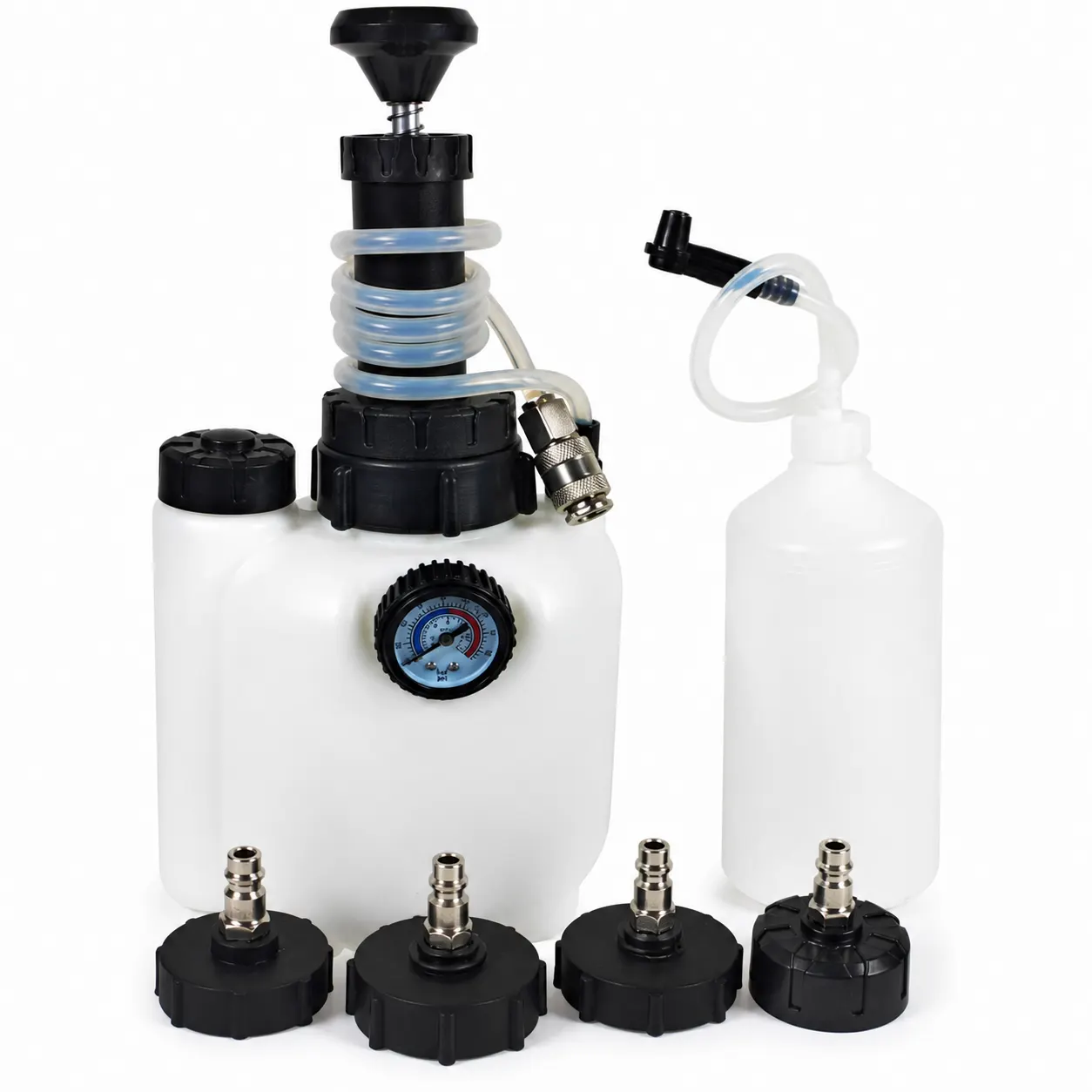
The Toolbrake page identifies a locked 3 L reservoir with four adapters and lists it for brake fluid replacement equipment and vehicle repair. The archived offer states plastic construction. That is the available product boundary.
The page does not say that the item includes a pump, pressure control, hoses, vehicle-specific caps, catch bottles, instructions or a complete brake-bleeding system. Manufacturer does not specify those wider contents, so the title should not be expanded beyond the documented component.
| Documented | Not documented |
|---|---|
| 3 L reservoir | Machine model compatibility |
| Four adapters | Thread, seal, hose and vehicle coverage |
| Listed for brake fluid replacement equipment | Complete machine or complete bleeding procedure |
| Plastic construction stated | Pressure, chemical resistance and service life |
Run the machine-side fit check
Start with the equipment already owned, not the vehicle search term that led to the product. Photograph or measure the existing reservoir connection, outlet, seal and locking arrangement, and compare them with the information available on the product page. Do not assume that four adapters cover an unnamed interface.
The product page does not identify a machine brand, model list, thread size, seal type or pressure rating. Manufacturer does not specify them. If the old part is unavailable for comparison, ask for the missing evidence before ordering.
- Confirm that the required item is a reservoir component rather than a full machine.
- Compare the established process with the stated 3 L capacity.
- Match the existing equipment interface to a documented adapter or connector.
- Stop if the machine-side fit, fluid requirement or operating procedure is unresolved.
Keep road safety outside the sales claim
GOV.UK's vehicle-safety guidance says the vehicle handbook provides brake-fluid maintenance information and asks drivers to check that the brakes work. The Highway Code warns that low brake fluid may result in brake failure and a crash. These sources set a safety boundary around the job.
The Toolbrake listing does not verify a vehicle-specific procedure, fluid specification, pressure result, leak check or roadworthiness outcome. Do not claim improved braking, universal vehicle fitment or safe-to-drive status from the reservoir purchase.
- Use the vehicle handbook for the vehicle-side maintenance and fluid instructions.
- Use the machine manufacturer's instructions for the reservoir-side procedure.
- Obtain competent inspection or repair help when the brake system's condition or the result is uncertain.
The honest buying boundary
This product can be considered when an existing brake-fluid replacement setup needs a reservoir component and the 3 L, four-adapter configuration matches verified interfaces. It is not documented as a universal spare, a complete machine or a stand-alone brake-bleeding method.
If the purchase depends on pressure, chemical resistance, connector dimensions, brake-fluid compatibility or service life, manufacturer does not specify the answer on the product page. Keep the order on hold until the responsible documentation resolves it.
Related guides and product details
Treat the item as a possible machine-side reservoir replacement only after the interface and procedure are verified; do not turn it into a vehicle-safety promise. Read 3L Brake Bleeder Reservoir Replacement: Checks Before Buying for related guidance. Read 3 Litre Brake Fluid Replacement Reservoir: Workshop Fit Checks for related guidance. Review the documented specification on the 3 L Brake Fluid Replacement Reservoir with Four Adapters product page before ordering.
Sources and safety context
- Supports the 3 L reservoir, four adapters, listed use and plastic-construction statement. 3 L reservoir product page.
- Supports the use of the vehicle handbook and checking that brakes work. Check your vehicle is safe to drive.
- Supports the warning about low brake fluid and brake failure. The Highway Code: vehicle maintenance, safety and security.